Here is everything you need to know about how to order in a French boulangerie (bakery) in Paris – including some helpful and easy French phrases to use (and impress people with)!
If you’re a fan of delicious pastries and baked goods, a visit to a French boulangerie is a must. In these quaint bakeries, you’ll find a mouth-watering selection of breads, pastries, and other treats, including a variety of viennoiseries.
What Exactly is a French Viennoiserie?
But what exactly are viennoiseries, and why are they so special?
Viennoiseries are a type of baked goods that originated in Vienna, Austria, and are now popular in many countries around the world. They are typically made with a yeast-leavened dough and often include butter, eggs, and milk, giving them a rich, flaky texture and a delicate, slightly sweet flavor.
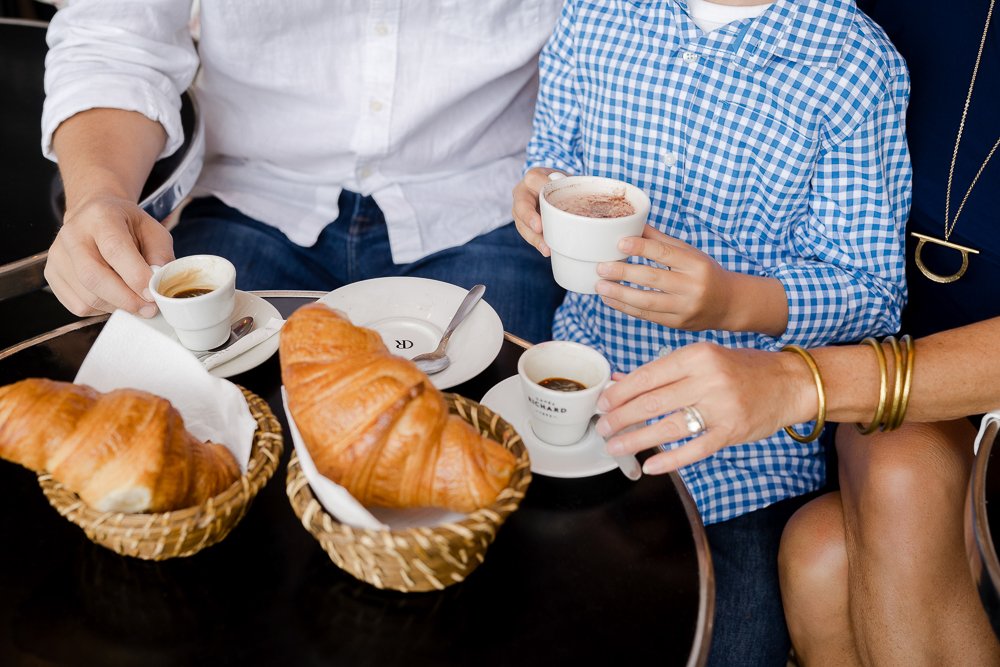
In a French boulangerie, you might find a variety of viennoiseries, each with its own unique flavor and texture. They’re baked on a daily basis, sometimes multiple times a day!
You can tell that you found a good pastry shop if you can smell the baking and the butter from outside the French boulangerie. If you smell it, you know they’re baking things FRESH!
Popular French Pastries in French Boulangeries:
Here are some of the most popular options that you’ll find in a Parisian boulangerie:
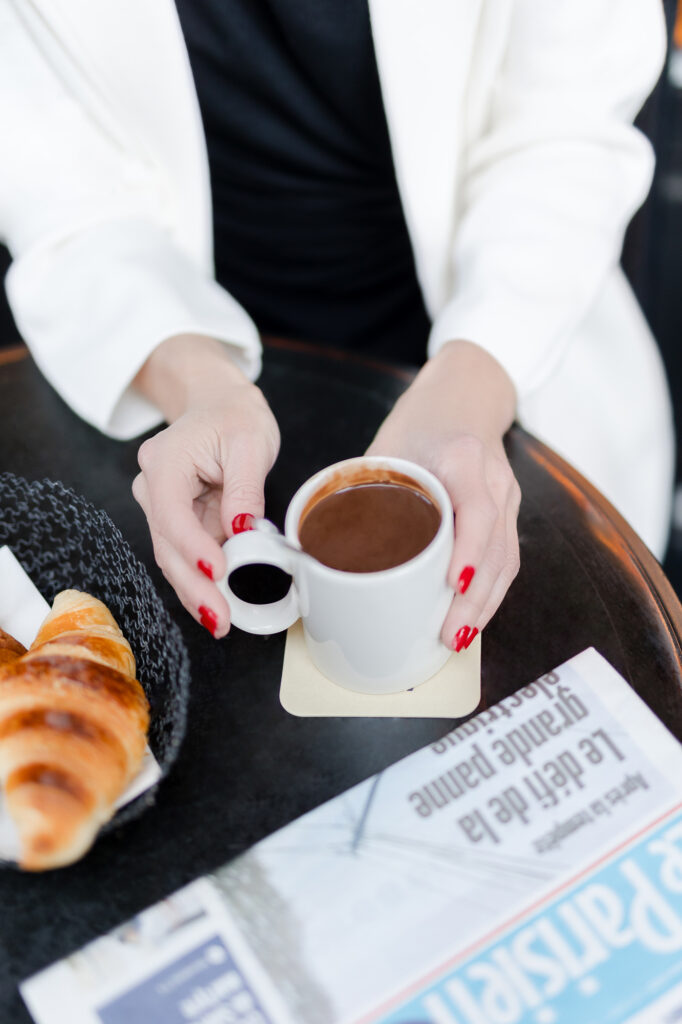
Croissants
- Everyone knows croissants! These world-famous crescent-shaped pastries are made with layers of buttery, flaky dough and are often served for breakfast or as a snack. They can be plain or filled with chocolate, almond paste, or other ingredients.
There’s a different between a croissant normale and a croissant au beurre. You’re going to want a “croissant au beurre” as it’s made with real butter and not margarine. The perfect flakiness of delicious croissant au beurre is nothing short of heavenly. DO NOT MISS THIS!!!!
Pro tip: To know if you have a fresh delicious croissant in your hands, you’ll be absolutely COVERED in croissant crumbs as you’re eating it. WORTH IT!
Pain au Chocolat
- These are similar to croissants, but they are filled with chocolate instead of being left plain. In english you’d call them a chocolate croissant. The chocolate adds a rich, indulgent flavor to the flaky, buttery dough.
Between a croissant au beurre and a pain au chocolat, it’s hard to say what’s better. They are both incredible and must tries!
Pain au Lait
- This is traditional sweet bread, they’re great for the morning and you’ll see french kids dip them in their hot chocolate!
Brioches
- These are sweet, eggy breads that are often shaped into round or oval loaves. They can be sliced and served as a breakfast bread or used as the base for a sandwich. Brioches are typically slightly sweeter and richer than regular bread.
Pain au Raisin
- These are sweet pastries filled with raisins and sometimes other dried fruits or nuts. They are often served for breakfast or as a dessert. The raisins add a juicy, slightly tart flavor to the rich, flaky dough.
Chausson aux Pommes
- These are pastries (like apple turnovers) filled with apples and cinnamon and are often served as a dessert or a snack. The apples add a crisp, slightly tart flavor that pairs well with the sweet, buttery dough.
Kouglof
- This is a sweet, yeasted bread that is baked in a special mold and often topped with almonds or other nuts. It is often served as a dessert or a special occasion treat. The almonds add a crunchy, nutty flavor to the rich, slightly sweet bread.
In addition to these viennoiseries, you’ll also find a wide range of other pastries and baked goods in a French boulangerie, such as tarts, cookies, and cakes.
Breads You’ll Find in A French Bakery
Here is a brief overview of some popular types of traditional French breads you’ll find in every French boulangerie:
1. Baguette
This is the most iconic and recognizable type of French bread. It is a long, thin loaf with a crisp crust and a soft, airy interior. Baguettes are typically made with only four ingredients: flour, water, salt, and yeast. They are typically enjoyed as a sandwich bread or as a accompaniment to a meal.
It’s important to note that there are different types of baguette!! If you want the typical crunchy exterior ask for a “baguette tradition“, otherwise you’ll get a standard regular baguette which is more like white bread without the crusty exterior.
Definitely go for the traditional baguette. They’re SO much better.
Tips for ordering a Baguette in French:
If you prefer it on the more cooked side you’ll want to ask for “une baguette tradition bien cuite“ (well cooked).
Otherwise if you prefer less cooked you’ll ask for “une baguette pas trop cuite“.
There are TONS of different French boulangeries all over Paris and if you want to try the best baguette in Paris you’re in luck!
Every year there’s a competition for the best baguette in Paris (the winner supplies the french president with baguettes for that year – a huge honor!). You can easily find out who won over the last few years with a simple google search of “prix de meilleur baguette de paris” and then the year.
A baguette is so much more than a loaf of bread, it’s truly a deep part of the french culture and from the small villages to large cities you’ll always be able to turn a corner and find a good baguette.
Also note, french people will NOT travel across the city to get a baguette, you typically buy it in the morning or walking home from work so you’ll find them in every neighborhood. (Can you tell we love baguettes? haha)
2. Pain de Campagne
This type of bread is also known as “country bread” because it was traditionally baked in the countryside. It is made with a mix of white and whole wheat flours, and often contains seeds or grains for added flavor and texture.
Pain de campagne is denser and heartier than a baguette, and has a slightly chewy texture. It’s absolutely delicious toasted with some melted french butter (I LOVE Échiré brand butter) and confiture (jam).
3. Pain de Mie
Pain de mie is a type of white sandwich bread that is known for its soft, tender crumb and its ability to retain moisture.
It is made with a high-protein flour, which gives it its fine, delicate texture. It is often sliced horizontally to make sandwiches, and is also used to make French toast.
This is what you’d use to make a croque monsieur if you make it at home or get it from a french restaurant. It’s more like a typical sandwich bread but when you get it baked fresh from the local French boulangerie it won’t stay soft for more than a few days.
4. Brioche
Brioche is a rich, buttery bread that is made with a high proportion of eggs and butter. It has a golden, slightly sweet flavor and a tender, flaky texture. It is often enjoyed as a breakfast bread, but can also be used to make sweet desserts like brioche bread pudding or savory dishes like chicken sandwiches.
This is also what you’d use to make pain perdu (The French word for French Toast!)
5. Fougasse
Fougasse is a type of bread that originated in the Provence region of France.
It is shaped like a leaf or a ladder, and is traditionally made with olive oil and herbs. Fougasse is often served as an appetizer or as a side to a meal.
How to Order in a French Boulangerie:
Step one: Look at all the Pastries!
Decide what you would like to order before you approach the counter. French boulangeries typically offer a variety of breads, pastries, and sandwiches (see above), so take a moment to look at the display and decide what you would like to purchase along with the quantity.
Step two: The Art of the Greeting
Approach the counter and wait for the person behind the counter to acknowledge you. In a smaller French boulangerie, you may need to catch the attention of the person working behind the counter. You should say “Bonjour” to first greet them and then “S’il vous plait!” to get their attention.
Or, when you are ready to order, say “Bonjour” (hello) to the person behind the counter. This is very important in the French culture and a polite way to greet them and begin the interaction.
Step Three: Ordering Pastries in a Paris Boulangerie
Tell the person behind the counter what you would like to order. Use the appropriate words for the items you would like to purchase.
For example, “Je voudrais une baguette tradition, s’il vous plaît” (I would like a traditional baguette, please).
If you are unsure of the word for a specific item, you can point to it and ask “Comment ça s’appelle?” (What is this called?). The person behind the counter will be able to tell you the name of the item in French.
Step Four: How to Pay in a Paris Boulangerie
Pay for your items when you are ready to check out. French boulangeries typically accept cash or credit cards. They usually prefer cash and coins but most now take cards at even small sums.
Step Five: Thank You and Goodbye
Thank the person behind the counter when you are finished. You can say “Merci” (thank you) or “Merci beaucoup” (thank you very much).
This is just as important in France as saying hello. In service environments, it’s considered rude not to say “Merci, au revoir” on your way out of a café or restaurant. And they will always say it back!
Step Six: Where to Enjoy your French Pastries
If you are planning to sit and enjoy your purchases in the French boulangerie, look for a table or seating area. When you are finished, make sure to dispose of any trash and clean up after yourself. This is a polite gesture and will help to keep the French boulangerie clean and welcoming for other customers.
If there are no tables available, you can take your purchases with you and enjoy them elsewhere.
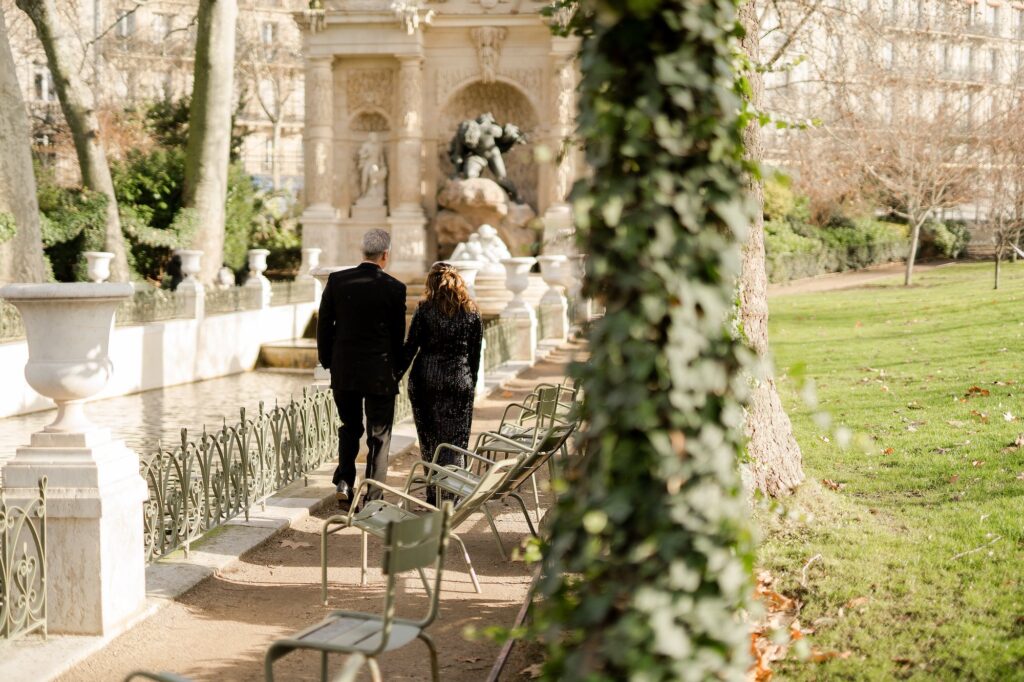
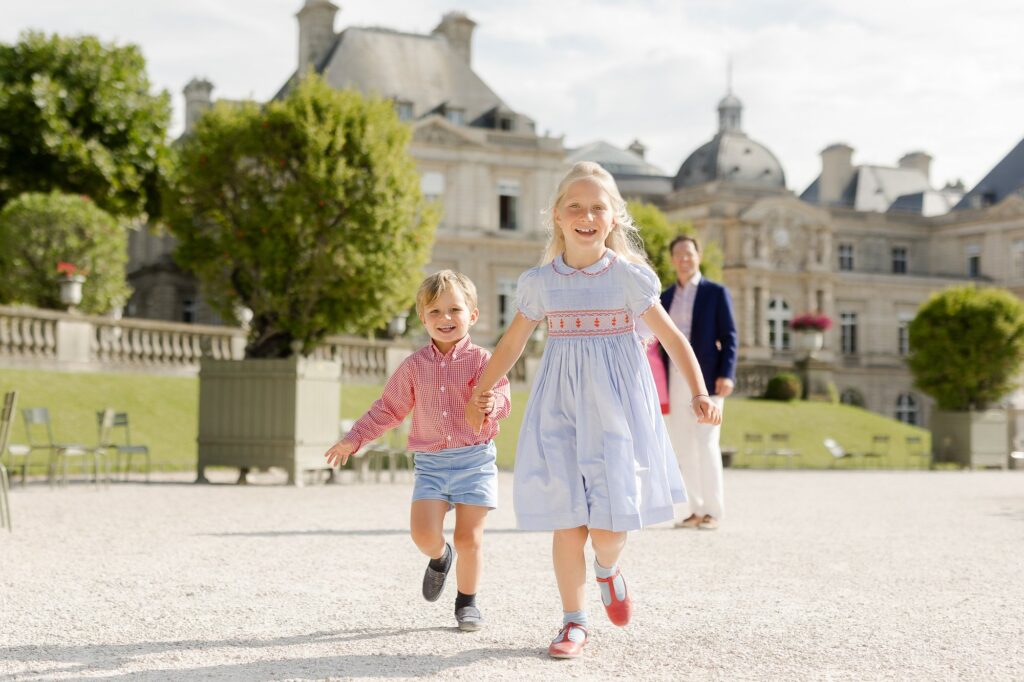
If you’re in the 6th Arrondissement, next to our Paris photography studio, we LOVE the Luxembourg garden for a picnic!
And if you want to make your Paris trip extra special, don’t forget to reach out HERE and book a photoshoot with us at Katie Donnelly Photography!
Basic Vocabulary to use in French Boulangeries: (With English Translations)
Pain / Bread
S’il vous plait / Please
Merci / Thank you
Bonjour / Hello
Au revoir / Bye
Je voudrais… / I would like…
Un / One
Deux / two
Trois / Three
Quatre / Four
Cinq / Five
Et avec ceci / And with that…? (often the bakery workers will use this as a way of asking if you want anything else)
Pain complet / Whole wheat flour bread
Boulangerie / Bakery
Our Favorite French Boulangerie in the 6th Arrondissement:
If you’re near our Paris photo studio in the 6th arrondissement in central Paris, there are a few AMAZING boulangeries.
The one we love the most for viennoiseries/ breakfast pastries is Maison Mulot. You can smell them baking from a half a block away and it’s HEAVEN).
The one we love the most for breads is Liberté (you can watch them prepare everything through huge windows inside looking into the kitchen!). You cannot go wrong with these!!!
Ready to Book Your Paris Photoshoot?
Click HERE to book your Paris portrait session with us at Katie Donnelly Photography.
We cannot wait to bring your vision to life!!